Successful Captive Breeding of Mangrove Clam: Opening New Avenues for Mariculture
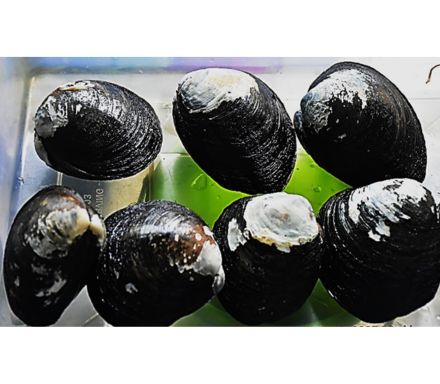
The mangrove clam or mud clam, locally called 'Kandal Kakka' in northern Kerala, is a burrowing bivalve inhabiting organic-rich muddy substrates in intertidal mangrove ecosystems. Among the larger clam species globally, it attains shell widths of ≈10 cm and plays an important ecological role in nutrient recycling and sediment stabilisation in tropical estuarine systems. In India, mangrove clam, Geloina sp., is traditionally harvested on a subsistence scale by coastal and mangrove-dependent communities for consumption, contributing to household nutrition, food security, and supplementary livelihoods. Not part of organised fisheries or mariculture, the species, nevertheless, possesses considerable potential for promoting mangrove-based livelihoods due to its hardy nature and tolerance to wide salinity fluctuations. The species is a promising yet underutilised candidate for mangrove-based mariculture and stock enhancement. Development of seed production and grow-out protocols could facilitate low-input, community-managed culture systems integrated with mangrove conservation, supporting livelihoods and nutritional security of dependent communities.
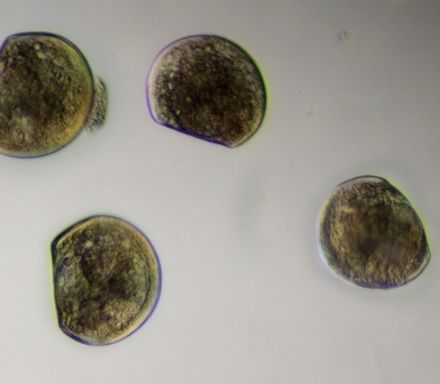
The ICAR–Central Marine Fisheries Research Institute has achieved the country’s first successful induced breeding of the clam in November 2025 and achieved its complete captive larval rearing at its Mariculture Facility, Njarakkal, Kochi. Complete embryogenesis and larval development were accomplished. Achieved successful spat settlement of 20/cm2 from the 18th day post-spawning, a critical milestone in the bivalve life cycle.
This breakthrough represents one of the very few documented instances globally of induced breeding, larval rearing, and spat production of the mangrove clam, effectively bridging a critical gap between biological knowledge and captive seed production. Following the successful induced breeding of the clam, ongoing research is focused on standardising larval rearing protocols and optimising nursery management practices to improve survival and enable scalable hatchery production, marking a significant step towards sustainable seed production, stock enhancement, and mariculture development of the mangrove clam.